Stripping wooden furniture: which method and which paint stripper for wood?
There are two ways to strip wooden furniture: chemical stripping, which softens the layers of paint, varnish, woodstain or wax before they are lifted off with a scraper, and sanding, which removes them by abrasion. Chemical stripping with a paint stripper for wood is the method to choose as soon as there are several layers, mouldings or relief; sanding suits thin layers on flat surfaces.
Doors, shutters, staircases, furniture, panelling: over time, successive layers build up, flake and end up spoiling both the look and the soundness of the piece. Badly stripped, a piece of furniture cannot hold its new finish properly. Whether you are upcycling furniture or restoring original joinery, this guide covers the two methods, the steps of chemical stripping, repairing the wood and choosing the finish.
Why strip wooden furniture?
Getting back to bare wood
A build-up of paint, varnish or wax stops a new finish bonding properly. Without stripping first, the new coating soon flakes.
Preserving the quality of the wood
Old finishes that have aged badly and broken down can trap moisture against the wood and stop it breathing. This encourages swelling, cracking and deterioration of the material. Stripping frees the pores of the wood.
Personalising and customising
Once rid of its old layers, the piece can take the finish of your choice: paint, varnish, oil or wax.
Extending its life and saving money
Stripping a piece of furniture gives it a new lease of life and saves you buying another.
Which stripping method should you choose for your wooden furniture?
There are two main ways to strip wood: chemical stripping and sanding. The choice depends on the thickness of the coating to be removed, the type of wood and the level of detail on the piece.
Chemical stripping of wood: steps and recommended products
The choice depends on the thickness of the coating, the type of wood and the level of detail on the piece.
Choose chemical stripping if the piece has several thick layers, if it has mouldings, relief or ornament, or if it is a wood with a pronounced grain such as oak or walnut, which sanding could scratch deeply.
Choose sanding if the layer of paint or varnish is thin and in generally good condition, if the surface is flat with no relief, and if the wood has a regular grain (pine, fir, poplar).
Sanding is not recommended on several thick layers: it would take a long time and remove a lot of material.
How to strip paint from wood with a chemical stripper?
Chemical stripping is the most effective way to remove several layers of paint, varnish, woodstain or wax quickly, with no risk of damaging the relief and detail of furniture and panelling.
Step 1 – Prepare the working area
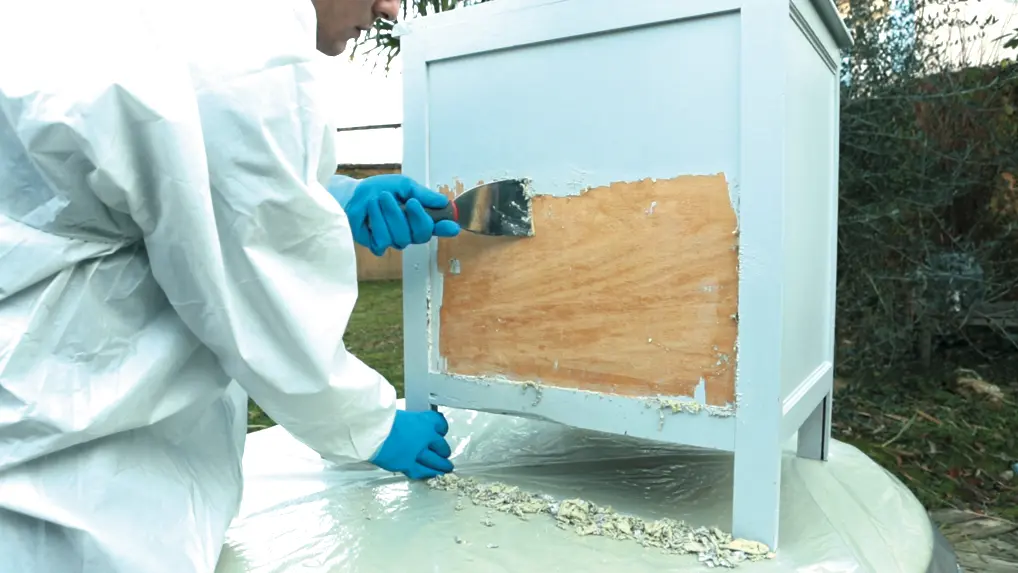
Work in a well-ventilated space (outdoors if possible) to avoid breathing in fumes. Protect nearby surfaces that are not to be treated.
Step 2 – Protect yourself properly
Always wear the recommended personal protective equipment (PPE):
- Chemical-resistant gloves
- Safety glasses
- Waterproof overalls or covering clothing
Step 3 – Apply the stripper
Apply the product generously to the surface, following the manufacturer’s instructions. Respect the stated contact time exactly.
Step 4 – Strip
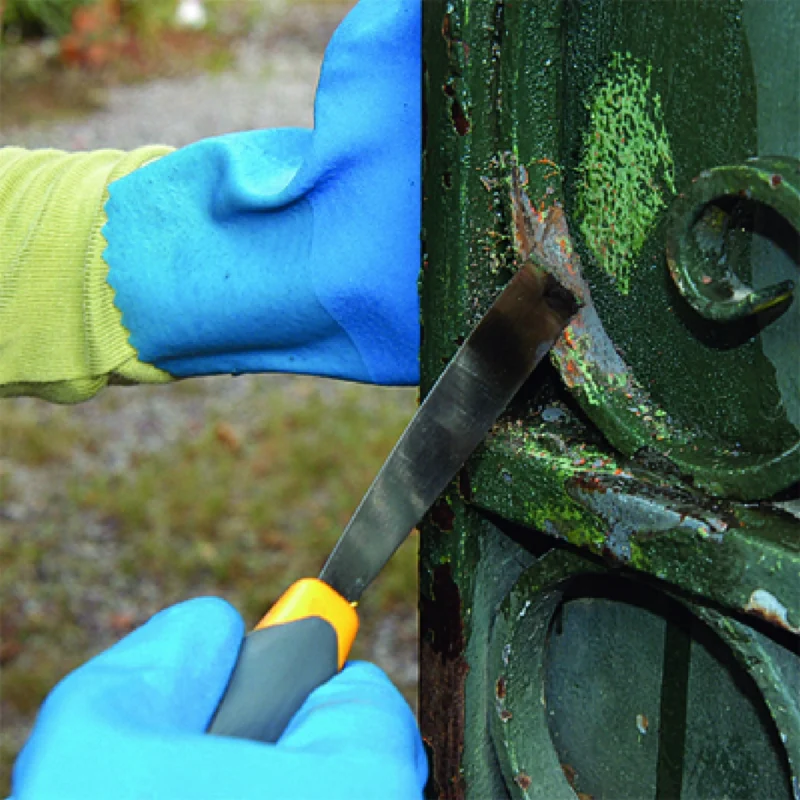
Once the coating has softened, use a scraper or stripping knife to lift off the residue. Work along the grain of the wood to avoid scratches.
Step 5 – Clean and leave to dry
Depending on the stripper used, cleaning may be needed before the next step. Let the piece dry completely before applying a new finish.
Which chemical stripper for wooden furniture?
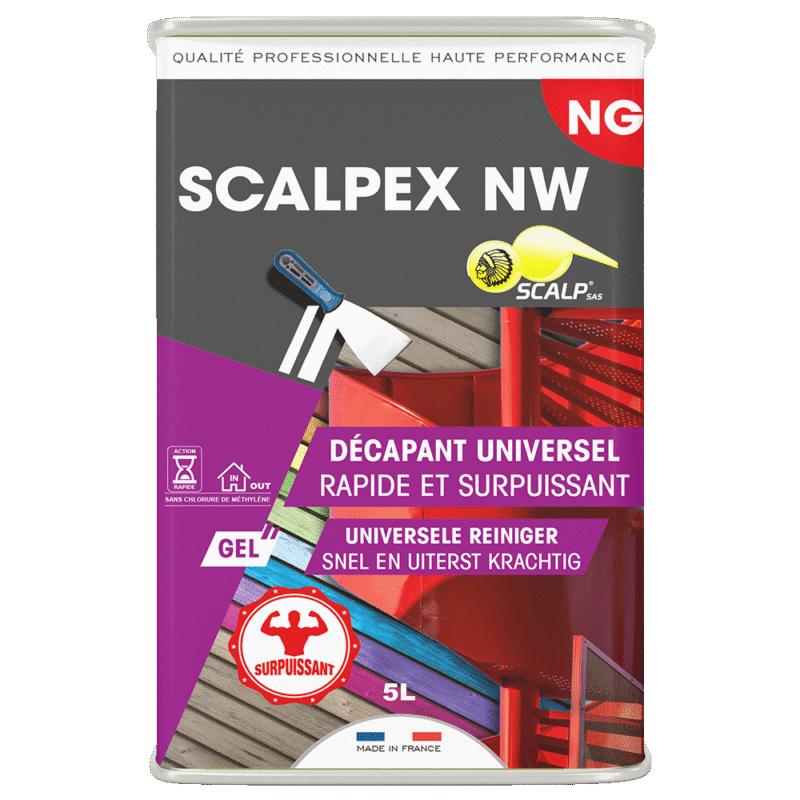
SCALPEX NW - Universal gel stripper
SCALPEX NW NG is a universal gel chemical stripper. It is ideal for timber joinery (staircases, doors, shutters, furniture). Its gel texture is an advantage on vertical surfaces: it does not run.
Suitable substrates: timber, panelling, iron, zinc, stone.
Coatings removed: woodstains, paints, varnishes, adhesives.
Advantages:
- Gel texture: clings to vertical surfaces without running
- No rinsing: simplifies and speeds up the job
- Usable indoors and out
- Universal stripper: one product for several substrates
Ideal for: doors, shutters, staircases, furniture, panelling, surfaces with relief and mouldings.
No-Rinse Paint Stripper for Wood – SCALPEX® NW NG
SCALPIK DECAP'SEC NW - No-rinse liquid stripper for joinery
SCALPIK DECAP’SEC NW NG is a liquid stripper formulated to reach every corner of a piece of joinery. Applied by brush or spray, its fluidity lets it reach hard-to-access areas: corners, mouldings, joints.
Suitable substrates: timber joinery (staircases, shutters, doors, furniture). Coatings removed: paints, varnishes, adhesives, woodstains.
Advantages:
- Spray or dip application: ideal for complex pieces and small items
- No rinsing: a significant time saving
- Liquid formula: reaches every corner
- Usable indoors and out
Ideal for: staircases with balusters, louvred shutters, frames and surrounds, small items in batches.
No-Rinse Paint Remover for Metal – SCALPIK® DECAP’SEC NW NG
SCALPIK® DECAP'SEC NW NG is a high-performance liquid paint remover for metal and multiple surfaces, designed for rapid and efficient coating removal. It enables fast paint removal on metal, wood, zinc, galvanised steel, stone and concrete, eliminating paints, varnishes, stains and adhesives with minimal effort.
This professional-grade paint stripper for metal and wood is ideal for renovating joinery such as staircases, window frames, shutters, doors, furniture and panels. Its versatile liquid formula can be applied by immersion, spraying or brushing, making it a practical solution for refurbishment and industrial maintenance projects.
Stripping varnished, painted or waxed wood: what changes
A chemical stripper treats woodstains, paints, varnishes, adhesives and waxes alike: it is the number of layers and the complexity of the piece that determine the method, more than the nature of the coating. On dark or varnished wood, chemical stripping lifts the film without attacking the grain, whereas sanding would lighten the wood unevenly. It is also the simplest way to remove varnish from wood with carved detail.
On a waxed piece, the wax must be removed before any new finish, otherwise the paint or varnish will not bond.
Repairing the wood after stripping
Once stripped, the wood may reveal cracks, holes, scratches or areas damaged by age. These defects must be dealt with before the new finish is applied, to obtain a perfectly smooth surface.
SCALP MULTI'RESTOR - Two-part filler for wood
This two-part polyester resin filler is perfect for filling cracks, holes or areas damaged by the natural ageing of the wood.
Available in several shades (white, dark oak, pine), it easily matches the species of your furniture.
Repair steps:
- Prepare the surface: clean and dust the piece so the filler bonds well.
- Apply the paste: use a filling knife to fill the cracks or holes. Smooth the surface well to minimise touching up after drying.
- Sand lightly: once the paste is dry, use fine-grit abrasive paper to level the surface for a smooth, even result.
Universal repair filler for wood, metal & masonry – SCALP MULTI’RESTOR
SCALP MULTI’RESTOR is an universal repair filler designed for repairing holes, cracks, damaged edges and surface defects across multiple substrates including wood, metal, plastic, polyester and masonry.
This professional two-component repair compound delivers excellent adhesion and fast curing, making it ideal for refurbishment, restoration and maintenance work. It is particularly effective for restoring aged or damaged timber, including filling deep cracks caused by natural wear.
Its smooth, easy-to-apply paste formula ensures durable repairs on both interior and exterior surfaces, providing a strong, sandable finish ready for painting or coating.

Which finish after stripping?
Paint adds colour and protects the wood, in a multitude of shades and finishes (gloss, satin, matt).
Varnish protects against stains, damp, scratches and wear while showing off the wood. It too comes in gloss, satin or matt.
Wood stain penetrates the pores of the wood and gives it an even colour while leaving the grain visible: the choice to make if you want to keep the natural look.
A piece of furniture or joinery that has been properly stripped, repaired and protected can last for decades more.
Discover our full range of SCALP SAS strippers and wood renovation products
Frequently asked questions
How do you strip wooden furniture without chemicals?
By sanding, provided the layer to be removed is thin, the surface is flat and the wood has a regular grain. On thick layers or pieces with mouldings, sanding becomes slow and removes material.
Can you strip a piece of furniture without sanding afterwards?
Sanding after stripping is mainly for levelling the surface after filling. A no-rinse stripper such as SCALPEX NW NG leaves a substrate ready to take its finish once dry.
How do you strip a wooden staircase or shutters?
These are pieces with relief and recesses: the liquid stripper SCALPIK DECAP’SEC NW NG, applied by spray or by dipping, reaches the balusters, louvres and joints that a gel does not cover evenly. The same approach works for stripping doors with panels and mouldings.
Share
IT